Saturday, October 30, 2021

Coca-Cola’s 100 Billion Bottle Problem


The main facts summarised:
470 billion single-use plastic bottles are sold worldwide per year
25% of which are Coca Cola owned brands
50% of the 470bn are burned, dumped or littered each year.
Last year, Coca Cola produced a $20bn profit.


Pepsi and Danone and many other manufacturers DO NOT publish their annual results of collection and recycling of their used bottles. Coca Cola, however, do.
2020, Coca Cola sold 112 billion single-use bottles worldwide. That's 14 per person currently living on our planet!
Of this 112 bn, 56% made it back to recycling.
Meaning 49 bn were unaccounted for and that's just Coca Cola


Coca Cola problematic past with plastic
Coca-Cola has repeatedly come under fire for its dizzying plastic use. 


Last year, the company revealed that more than 1.9 billion servings of its drinks are consumed in more than 200 countries every day.


And this link to

link

Very import link above please click

Break Free From Plastic – an anti-plastic movement with more than 11,000 organizations and individual supporters – recently released a report tracking corporate plastic pollution.

It included 440 brand audits across six continents, and involved the collection of more than 330,000 pieces of plastic pollution.

The report named Coca-Cola as the world’s top corporate polluter for the fourth consecutive year. This is despite the company’s 2018 pledge to collect one bottle for every one sold.


Imagine that you are constantly eating, but slowly starving to death. Hundreds of species of marine mammals, fish, birds, and sea turtles face this risk every day when they mistake plastic debris for food. 


Plastic debris can be found in oceans around the world. Scientists have estimated that there are over five trillion pieces of plastic weighing more than a quarter of a million tons floating at sea globally. 


Most of this plastic debris comes from sources on land and ends up in oceans and bays due largely to poor waste management.
Plastic does not biodegrade, but at sea large pieces of plastic break down into increasingly smaller fragments that are easy for birds to consume. 


A nose for sulfur
in the early 1970s showed that tube-nosed seabirds use their powerful sense of smell, or olfaction, seabirds are attracted to dimethyl sulfide (DMS), a natural scented sulfur compound. DMS comes from marine algae.


However, in a study just published propose a new explanation: For many imperilled species, marine plastic debris also produces an odour that the birds associate with food and is very similar DMS


So much plastic trash is flowing into the oceans than 90 per cent of seabirds eat it now and virtually everyone will be consuming it by 2050 In a new study published this week, tracks for the first time how widespread plastics have become inside seabirds around the world.

Scientists have been tracking plastic ingestion by seabirds for decades. In 1960, plastic was found in the stomachs of fewer than five per cent, but by 1980, it had jumped to 80 per cent. 

The most disturbing finding is. 

“Global plastic production doubles every 11 years “So in the next 11 years, we’ll make as much plastic as we’ve made since plastic was invented. 

The world's first fully synthetic plastic was Bakelite invented in New York in 1907, by Leo Baekeland who coined the term "plastics" Dozens of different types of plastics are produced today, such as polyethene which is widely used in product packaging,
and polyvinyl chloride (PVC), used in construction and pipes because of its strength and durability. Many chemists have contributed to the materials science of plastics, including Nobel laureate Hermann Staudinger, 
who has been called "the father of polymer chemistry.


So it's his fault?


You can help: pay attention to how much plastic you throw away grocery bags, Styrofoam cups, water bottles, packaging and try to use less and recycle and dispose of plastic correctly


sometimes I get a feeling that it is all's a bit too late

Images use with permission.


Tuesday, October 26, 2021

The search for the Snakebird.


Today at the Clot De Galvany

The 4 Amigos searched for the Snakebird with at least 3 Snakebirds present in the last week, to be honest, it only took a few minutes for one to popped out, a tick in the book of life for Michelle, and a year tick for John. It was flushed by a Blackbird and flew a long way out of sight.


Wryneck Bird 1
Notice how lightly barred the breast pattern is compared with bird 3


Only moments later another bird perched in a dead tree, close by and easy to pick out. 
(Michelle found this one and as a lifer for Michelle it's now her turn to buy the beer?) and not a Werther's moment in sight we got to get organised?
Unbelievable 

Wryneck Bird 2


En route to the big hide, yet another Wryneck perched up for us.

Bird 3
Notice the feather pattern above the eye is different from Bird 2 and Bird 1 and the spots in the wing is different to Bird 2


At the big hide, Malcolm Palmer (CBBC) sneaked in, arriving in incognito and so we didn't recognise him until he spoke, good job we weren't talking about him, it could have been very embarrassing moment, he mention that he'd seen a late Common Redstart, at the dry hide so, later on, we went to check it out, on the way a flyover of yet another Wryneck.
I was the only one, to see this bird?

I caught up with one of the wardens of the Clot De Galvany and reported our sighting and my thoughts on why Wryneck have returned. 
And so after reviewing my images I'm sure that I've  photography at least 4 Different Wrynecks, seen my earlier post from 22nd the Wryneck photo and feather detail doesn't match any of the October 26th images?


 For year's the big pool has been dry and only the smallest amount of water there, till the Gota Fria September 2019 click link below to see the blog and images and we all know what happens in 2020--- Covid19

But could I remind everybody the reality of  Global Warming its here,
 Thing have changed and all the sign are there for all to see.


 So I think it's all to do with the water that's accumulated in the big seasonal lakes, Almost every Wryneck I've ever seen has occurred close to water for instance seen at San Felipe or other places or in a sandy path or close to a dry stone walls licking up Ants

The usual suspects were there but no sign of the Ferruginous Duck?

 see my earlier blog post 
For species list

Wrynecks are in the woodpecker family, but I don't think they exactly fit in, at least at first glance in the family of Woodpeckers
For one, they don't peck wood. Instead, they nest in holes that other species have laboriously excavated for themselves. And unlike their tree-drilling brethren, Wrynecks forage on the ground, using there exceedingly  long tongues to slurp the fat-rich Ants

Nice birding morning 

With Mark, John, Michelle, also good to catch up with Malcolm Palmer
Where to next week?
Have a great day
Cheers Bryan 


Friday, October 22, 2021

A late local update


News from last week

I mentioned in my previous post my birding friend Trevor returned to Spain for the first time since March 2020, when the Covid Pandemic and lockdown for the UK and Spain came into force. Last week unfortunately it also coincided with the busiest time of the year for me. With the welcomed return of family not seen for almost 2 years, (where the time gone?)  and with singing and with different events going on I'm burning the candle on both ends.


So It's late news from last week, apologies for this and just a summary, and  I've not mentioned ever bird seen.

Santa Pola Salinas and including El Pinet 

45 + Great white Egret, lots of Spoonbill 100s +++  Marsh Harriers, Waders seen Ruff, Wood Sandpiper, Common Sands, Little Stint, Dunlin, Sanderling,  Avocet  Black-tailed Godwits,  both Shanks,  LRP and Ringed Plover, Yellow Wagtails, Collared Pratincoles,  Terns, Whiskered and Sandwich, and a very late Common, lesser Black-backed Gull, Mediterranean Gull.

Mediterranean Gull

On the mountain of  Maigmo and Montnegre mostly all the tits and lesser Short-toed Tree Creeper,  stand out moment was, 3 woodlarks, a beautiful bird.

Woodlark


Woodlark

No sigh of any Trumpeter Finch, or any Raptors at Montnegra but Blue Rock Thrush, Black Wheatear Rock Sparrow, lots of Griffon Vultures,

The Colt De Galvany 

White-headed Duck


Friendly  Disagreement 

The usual quacker we're there, amazing numbers of Marbled Duck 38+ the reintroduction has worked well and next year brood will be tickable and free-flying.  1 Ferruginous Duck? Gadwall,  Kingfishers, Little Bittern, Squacco Heron, Night Herons, also the least 3 Wryneck calling they've been there a week so?

record image Ferruginous Duck?

To be honest, the Clots may be better than San Felipe VC for sighting and more importantly the water quality, it is good and clear, I've mentioned this several times before about San Felipe and the toxic blueish colours in the water? 

Wryneck

If the Clot was watched more it would surely have a better list of birds and after saying that there is a big increase in birders, photographers, camera clubs, Spanish, Europeans, and UK birders, visiting the Clot, it's good to see.

San Felipe 

Little Egret

Not much bird news to report, the water levels have been lowered for reed cutting so there is plenty of mud but few birds, because I guess of the disturbance  3 obliging Spoonbill which has been there almost a week,

Spoonbill

  a very confiding  Bluethroat, several seen during the morning.  Spotted Redshank, Green Sandpiper, Dark phase Booted Eagle, Tree Sparrows, lots of Little Egrets and Glossy Ibis, a few of groups of Penduline Tits but nothing mega?


Bluethroat


Bluethroat

Glad to see that the extensive liar liar graffiti and has been painted over in the hides at San Felipe I've no idea who it's meant for?

Booted Eagle


Dark Phase Booted Eagle

On a lighter note, on returning to the car at San Felipe,  Mark opened the car doors with the remote,  letting the hot air out, no problem we thought, till he wanted to put the keys in the ignition, no sign of the keys, Mark scratching his head? I said it's got to be in your pocket somewhere, but no?  Several body searches of pocket and still no sign of the bloody keys,  It's got to be in your man bag we turned out the man bag, no sign of the bloody keys, we even search under and around the car in case he'd drop them, but no!  We pulled at the back seat and looked under the front seat, on the floor, had it slipped down under the seat but no

Unbelievable 

After a tense few minutes, of scratching our heads we found them on the roof of the car in the little channel which guides the water away from the roof.

Senior moment sorted

Hunter Moon

Have fun

Make some news

Cheers Bryan


Saturday, October 02, 2021

The Clot


Just a quick update of the Clot

A few hour hours watching the quackers, with Mathew, Mark, Michelle, and John.  Its sounding like something out of the Gospels?  All the usual suspects were there with a few additions like Purple Heron roosted in a distant tree, 3 Night Herons in another roost, also a few Squacco Heron.


Black necked Grebe


Squacco Heron.

A very distant raptor appeared, initially, I thought to Booted Eagle,but then I back off the ID of Booted and the thought, mmm maybe Osprey? I felt sure it would come over the water of the Clot but it drifted on.


Booted Eagle

When I checked the photos on returning home it was a Booted Eagle which answer the question of why the bird didn't come to water?

Marsh Harrier, Kingfishers, Reed Warblers, a Fudge Duck showed very briefly before disappearing.  Mark had seen and photograph it the previous day, it might be a cross / hybrid type, we'll be keeping a lookout for this bird?


Night Herons

Quite a few late Sand Martins some House Martins and plenty of Swallows going through.

Trevor returns to Spain next week it will be good to see him and go birding

and a reunion of the NBBC

make some news

Cheers Bryan 


Tuesday, September 28, 2021

The three Amigos go Yecla


   Monday the 27th

Our last visit to Yecla was in October 2019, we were keen to see what had changed there?

Arriving as the sun came up and the half moon still a big presence in the sky, and a very cool 10 degrees, it's first time I've felt cold since February. 


Habit

There's lots more uncultivated fields, good for the seed eaters, perhaps it a hangover from Covid, we passed only 2 motor cars in 6 Hours of birding and nobody working the fields, except for the shepherd and his flock of 200 hundred sheep.

Lots of Magpies and hundreds of Woodpidgeon everywhere.  A pair of Thekla's Lark showed nicely and sat around long enough to observe all the features and get some photographs, in fact only one Crested Lark was seen during the day. 

Thekla Lark

Charms of Gold Finch 150+ in several places, Linnet, in good numbers, Tree Sparrow, Rock Sparrow, Corn Bunting, Little Owl, Black Wheatear, 6 Northern Wheatear,  a Common Redstart in a pine tree plantation, heard only Pin-tailed Sandgrouse and Calandra Lark.

Tree Sparrow

Our moment of the day came as we were watching 3 possibly 4 Lesser Kestrels when a Golden Eagle drifted by, John said there's a second bird much further away,


Golden Eagle


Lesser Kestrels 

 I took a few record shots of the second bird, checking the screen on the back of camera, it turned out to be a Short-toed Eagle, and unbelievable the bird then headed straight towards us stopping only to circle above the car and very obliging, and enough time for a few photos.  Later on a few Buzzard.


Short-toed Eagle

The only other moment of the day was the sheer numbers of migrating Swallows all heading one way south, a good number of Jackdaw and in the mix the odd Chough,

By the time we headed for home about 2 o'clock, it was 27 degrees and at the coast 31 degrees

A fun day out, plenty of Banter over common crane pidgeon?

A few slabs of fruit cake and tea scanning the vistas unfortunately the Weathers caramel sweets original stayed hidden and didn't come out, but the liquorice sweet made up for it?

 the other two members of the NBBC  John and Mark need an eye test?

Should have gone Specsavers?

Have fun

Cheers BT


Friday, September 24, 2021

Back birding after summer recess


I have to apologise to all the followers of my blog. For not keeping the blog up to date of late.

Its been just too hot for me to go birding through the peak summer months, and to be honest, I don't think I've missed anything of any significance or any thing that matters, we've had a brilliant spring migration and we've seen most everything you would expect to see plus more.

Wood Sandpipers

It's been a busy few months keeping he tourist entertained. (Singing) And with John and Michelle being away in the UK for a family wedding  we've missed several weeks birding, and with Gareth house hunting and out of loop we've missed him.

So we've had 2 mornings birding, it was great just to be out there, with John and Mark of the NBBC, great to have the banter back, and with like-minded people. And so a quick summary of some of the birds seen.

An escaped Oranged cheeked Cockatiel had me scratching my head for a while, till I recognised the call.  Year's ago I did have an escaped bird ( joey ) that came to my house twice a day for about a year for breakfast and dinner till he vanished maybe the millet seed wasn't up to scratch?

Oranged cheeked Cockatiel
( joey )

  Whinchat, and hundreds of Yellow Wagtails around the fields of Catral,  also Stone Curlew, Little-ringed Plover, 3 Wood Sandpipers, Ruff, 50 + Bee-eaters, Booted Eagle, Bluethroat, Collared Pratincole, plus all the usual suspects,

Whinchat


Yellow Wagtail


Stone Curlew


 Bee-eater

El Clot

Interesting morning but nothing mega to report, but plenty of quackers there, 8 Gadwall lots of White-headed Duck, Marbled Teal, Shovelers,  Common Pochard, a few Kingfisher pretending to be cruise missiles, Spotted Flycatchers, Reed Warblers, Snipe, Marsh Harrier, Glossy Ibis. Little and Black-necked Grebe. It's only going to get better as autumn progress?

Black-necked Grebe

John suggested a quick look at the Santa Pola Salinas was in order, I'm glad we did as it was quite a good decision.

 Caspian Tern

We pick out in the Black-headed Gull roost a Caspian Tern, which is a good find for us, a few lesser Black-backed Gulls in the mix, 

Osprey

2 Ospreys circled overhead, which gave us a photo opportunity,  a canteen of 37+ Spoonbills did a flypast,  Great white Egrets, Turnstones, Sanderling, Black-tailed Godwit, Redshank, Greenshank, Collared Pratincoles,  Audouin Gulls, and a point-blank Cettis warbler under the minimum focusing distance


Osprey

. And on the beach at El Pinet lots of Sandwich Tern and some Great Tits on the beach,  they always seemed to be in pairs? and double what you'd see in the pine forests of Maigmo Mountain.

 Unbelievable

Going to go back at some point and look for a Bearded Tit?


Turnstone

Let see what next week brings 

Make some news

Glad to be back online, have fun

Cheers BT.


Wednesday, June 23, 2021

The Longest Day


Monday 21st the Longest Day

Good morning

John Edward and I both commented on the blueness of the mountains around Montnegra today  I'm always going on about this Valley it's stunning up here?

More exploration and a definite new potential site for Trumpeter Finch, we'll be keeping an eye on this place and let you know how it pans out? I think we've covered all parts of this Valley, from all sides there's not a track that we've not been down or a village not explored.

 Montnegra does never produce a big list of birds in this valley sometimes there's a raptor or two, and it's mostly what you would expect to see, I must have birded this Valley hundreds of time over the last  15 years regularly. Other site's claim to see more birds, but there's never, ever anything photos to prove the sightings (it's a big list of fictitious birds with no substance) mostly a load of bollocks full of Bullshit and fake news. I could write the same crap watching Emmerdale

 I've got my first birding tour since late 2019  pre covid, it's only 9 birders/photographers from Holland an on and off sort of a week with them, where they choose to do their own thing or go birding/butterfly's so glad that I've been chosen to take them around I have taken the same Dutch birding group around some time ago.

Montnegra Today


Dusky Heath 

A classic Iberian butterfly, spilling over into the South of France and Italy, the dusky heath is a creature of hot, dusty tracks, bushy wasteland and sun-soaked, rocky hillsides. It is common in Spain - usually seen settled on paths or perched on vegetation and twigs near the ground. Although this particular butterfly might have a local variation, see the photo? Like all heaths, it only ever settles with the underside showing, but fortunately, this is quite sufficient for easy identification. Because of the outward displacement of the spot in s.5,


Copper Demoiselle Male


Copper Demoiselle Female


Keeled Skimmer

This species resembles the Black-tailed Skimmer but is slimmer and the male has no black tip. Females and immature males lack the black abdominal pattern. The pterostigma is orange and the thorax usually bears pale stripes. It breeds mainly in fast-flowing streams and flies from June to September. This dragonfly is common in central and southern Europe. Its flight is quite skittish, with frequent hovering, and it lands often. It can fly quite a distance from water, despite its seemingly weak flight. When it perches, the wings are held forward.


Birds seen
Trumpeter Finch, Blue Rock Thrush, Black Wheatear, Rock Sparrow, Corn Bunting, Chough, Bee-eater, Spotted Flycatcher, Nightingale, Black-eared Wheatear, Red-rumped Swallow,

Trumpeter Finch looking tatty

Corn Bunting

Red-legged Partridge

Spotted Flycatcher


A nice morning birding 
In the mountains
Shame no raptors?
Have fun
Cheers Bryan 

Tuesday, June 15, 2021

Bird of the Century


My old mates and birding friends on the Isles of Scilly have just made history they just found a Mega Bird, not just a mega but a mega of mega's ?

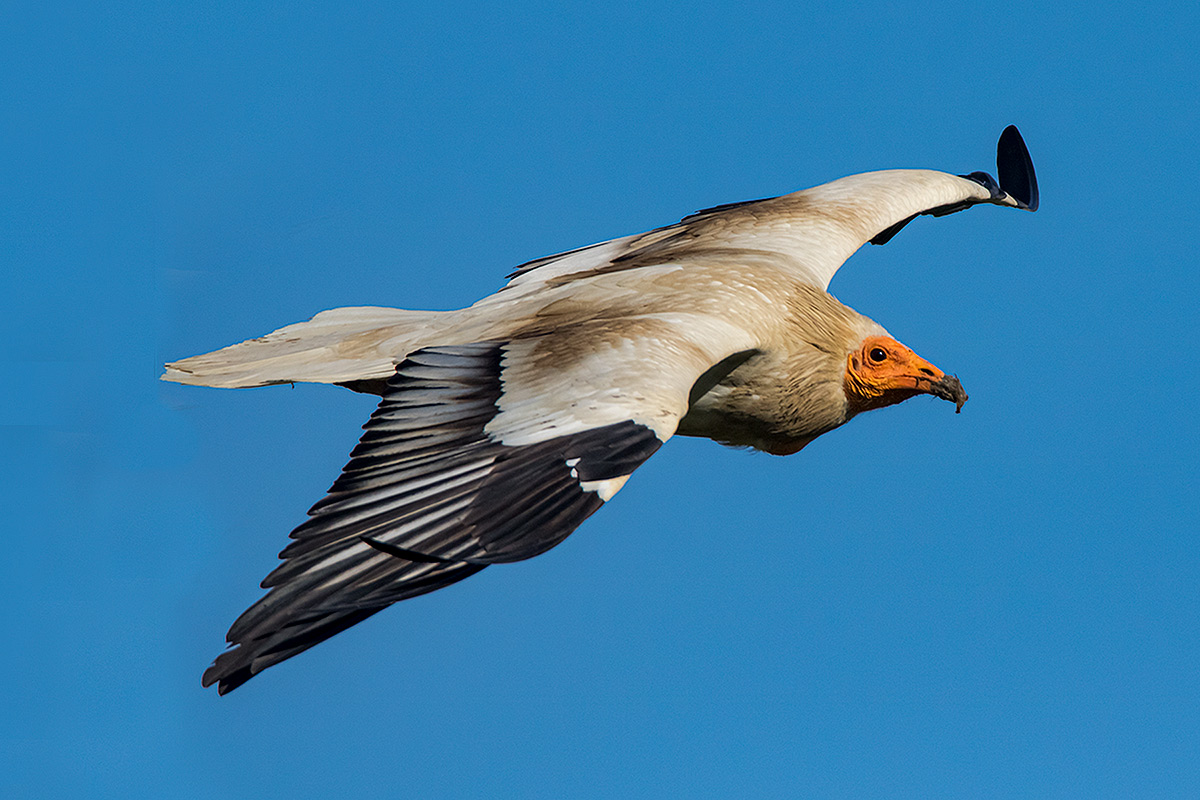
Egyptian vulture has been seen in the UK for the first time in what is believed to be more than 150 years.
The bird in question is Egyptian Vulture Described as a "once-in-a-century" sighting, it is thought it may have come to the Isles of Scilly from Northern France.

Egyptian Vulture Tresco Isles of Scilly

If the "incredibly rare" sighting is confirmed to be a wild bird, it would be the first since 1868,  mind-blowing?
Birdwatchers are expected to flock to the isles for a chance to spot it before it moves on

Wow-what a bird for Scilly and so very glad, my friend  Will Wagstaff  ( A legend ) was in on it, well done Will.
Primetime BBC 6 o'clock news  crazy
  unbelievable 

 It got me wondering what my Scilly list would now be when I left the Isles of Scilly. I was on 377  give or take a few splits not bad for a few square miles of land.

 Will Wagstaff, was at that time already over 400 so "Wills Scilly list" must be on loads more?
Will,  can you let me know where you are now?

Scilly Birders are normally very well travelled and have seen loads of rare birds around the globe and on Scilly, which is a major asset to them. Their awareness of the unthinkable is unthinkable and they are probably some of the best birders in the UK and are very much respected worldwide,

Great bird, so so, happy for the guys on Scilly
Make the news
Hope no resident birder missed it
Cheers  
Bryan Thomas


Egyptian Vulture

My photo from the Pyrenees